Quick Answer
Gili Meno has minimal light pollution because there are no cars, no major streetlights, and the island goes quiet by 23:00. On a clear moonless night, the Milky Way is visible to the naked eye, the constellations are sharp, and you can see meteor streaks without trying. The best stargazing happens between 21:00 and 02:00 on the west or north sides of the island. No equipment needed.
Why the sky is so good here
Three reasons, in plain order:
Almost no light pollution. The island has no streetlight grid. A few bars on the west coast have warm low light. The villages have low-wattage household lighting. None of it spills into the sky meaningfully. Compared to Bali or Java, the night sky here is genuinely dark.
Latitude advantage. Gili Meno sits about 8 degrees south of the equator. That's the right band for seeing both Northern and Southern Hemisphere constellations across the year. The Milky Way arch is visible at high elevation.
Stable air. The trade winds smooth out atmospheric turbulence most nights. Stars don't twinkle as much here as they do at higher latitudes. Crisp.
What you can see, by season
A rough month-by-month guide of what's overhead at around 21:00:
January, February, March. Orion overhead. Sirius (the brightest star in the sky) low in the south. Mars usually visible. Jupiter on most nights.
April, May, June. The transition to southern sky highlights. Scorpius rising in the east after sunset. The Southern Cross becomes visible from this latitude.
July, August, September. Peak Milky Way season. The galactic centre is overhead from 20:00 onwards. This is the time to come if seeing the Milky Way is the goal.
October, November, December. The Pleiades (Seven Sisters) is back in the eastern sky. Orion returns by November. Geminid meteor shower in December is the most reliable annual event.
Where to go on the island
A few honest spots:
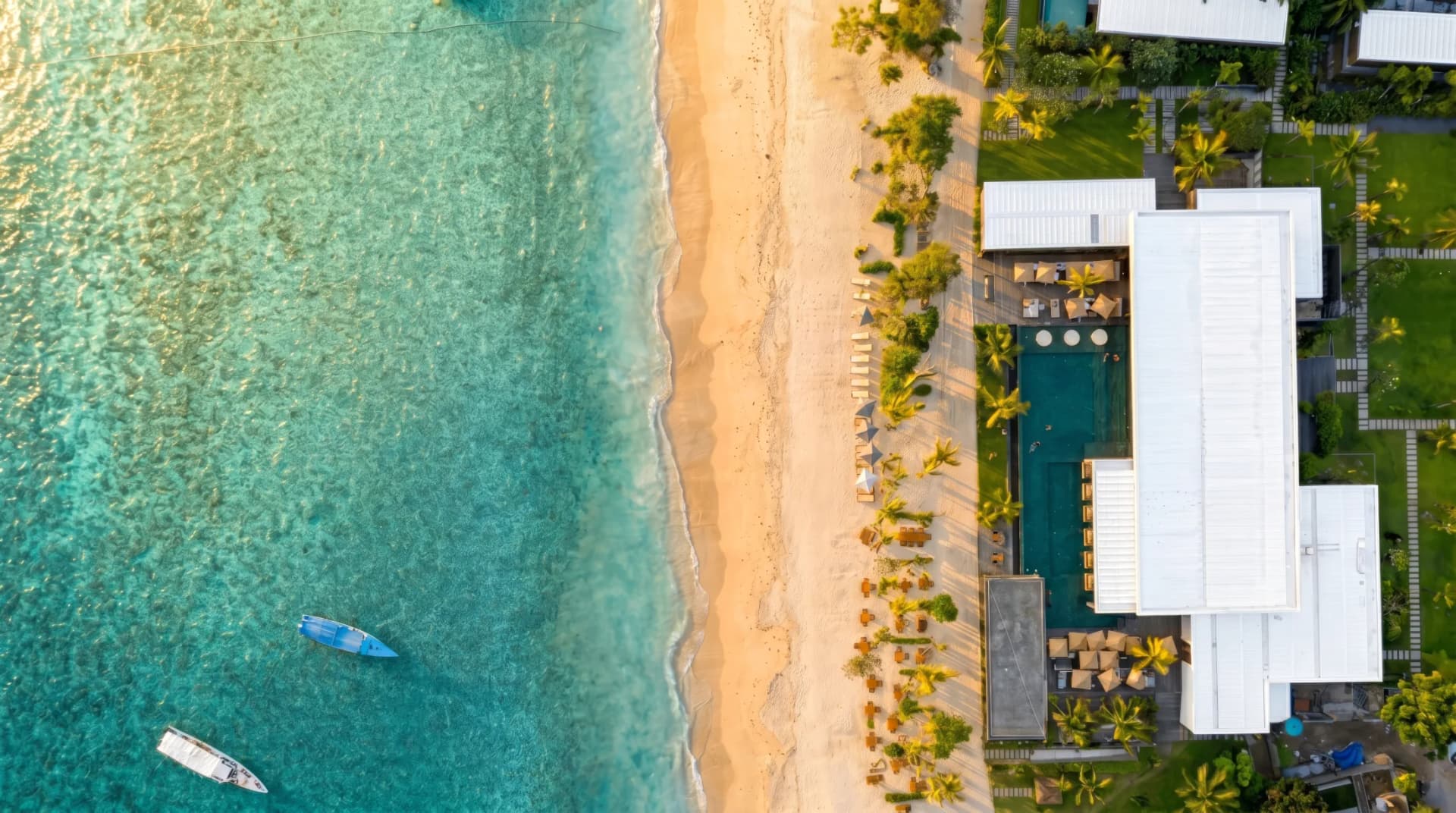
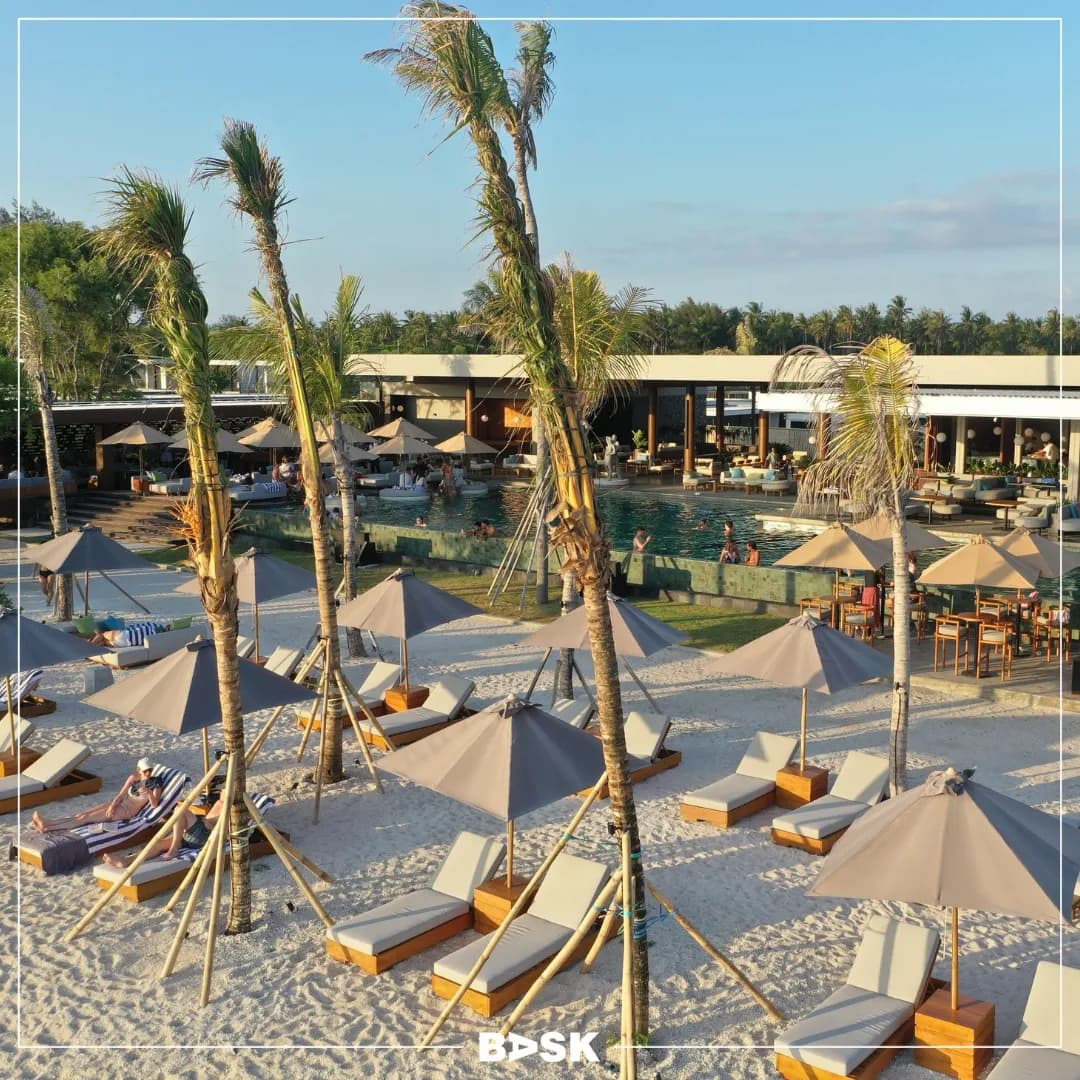
The west beach. Walk south from BASK along the shoreline. Find a stretch of sand without resort lights behind you. Lie on the sand or on a daybed. The horizon is the sea, the sky is unobstructed in 270 degrees.
The north end of the island. Quieter, fewer resorts. A short walk or bike. The sky here is darkest because the few human lights are smallest.
The east side. Faces Lombok, which has more lights than Bali across the water. Slightly more glow on the horizon. Still good overhead.
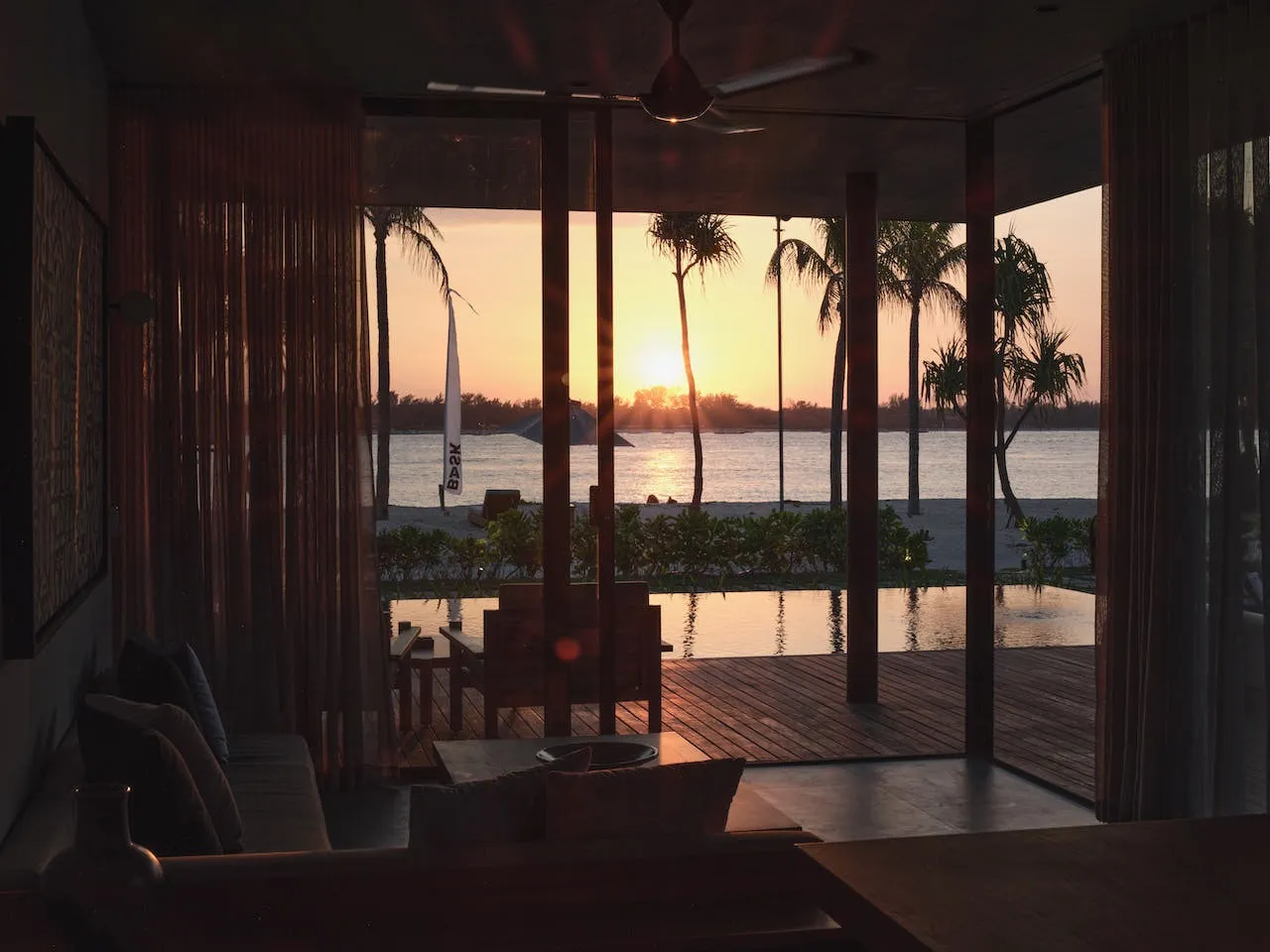
Your villa terrace. Often perfectly adequate. Turn off the outdoor lights, give your eyes 15 minutes to adjust, look up.
When to go
Moon phase matters most. New moon nights are best. A bright full moon washes out everything except the brightest stars. Check the moon phase before you book if stargazing is a priority.
Time of night. 21:00 to 02:00 is the window. Earlier and the sky still has twilight. Later and you'll fight sleep.
Weather. Clear nights are the requirement. Wet season has more cloud, dry season has more clarity.
How to actually see more
A few quiet practices that meaningfully change what you notice:
Let your eyes adjust. 15 minutes minimum without looking at a phone. Full dark adaptation takes 30 to 45 minutes. The difference is dramatic.
Use red light, not white. A phone's red-light mode (or a red filter) doesn't reset your night vision. Standard phone screens do.
Lie down. Standing and craning the neck gets tiring. A beach towel on the sand is the right tool.
Look slightly off-centre. The peripheral vision of human eyes is more light-sensitive. Faint objects are easier to see by looking just to the side of them. A trick that surprises most people.
Use a sky map app. Stellarium, Sky Guide, SkyView. Red-light mode on. Helps you identify what you're seeing.
What's special if you've never done this
A few experiences that change first-time stargazers:
Realising you can see the Milky Way. Most modern adults have never seen it because they live under light-polluted skies. The first time it's clearly visible is a quiet shock.
Meteor streaks. Even on a non-shower night, you'll see two or three meteors an hour with patience. They feel personal in a way that's hard to explain.
Satellites moving slowly. The brighter ones, including the International Space Station, move steadily across the sky for a few minutes. The Stellarium app predicts them.
A planet without a telescope. Jupiter and Saturn, sometimes Venus and Mars, are bright enough to see clearly. Binoculars show Jupiter's moons.
Equipment, briefly
You need almost nothing.
Bring:
- A beach towel or two for lying on sand.
- Light insect repellent (mosquitoes appear in dim hours).
- A red-light flashlight if you have one. A phone in red mode works.
- A long-sleeved layer if the breeze is strong.
Optional:
- A small pair of binoculars. Shockingly transformative on Jupiter's moons and the Pleiades.
- A camera capable of long exposures if you want to photograph. The phone night mode works passably; a small mirrorless with a fast wide lens works beautifully.
Skip:
- A telescope. The equatorial humidity is hard on optics. Visual binoculars are more practical.
- Bright headlamps. They ruin everyone's night vision.
Photographing the sky
If you're chasing the photograph:
- Wide angle, fast lens. 24mm or wider, f/2.8 or faster.
- 30 second exposure, ISO 1600 to 3200. Adjust to taste.
- Manual focus to infinity. Autofocus fails in the dark.
- A tripod, even a small one. Hand-held doesn't work for 30 second exposures.
- Include the horizon or a tree in the frame. Gives the photo scale and grounding.
The phone night mode produces surprising results. A Pixel or recent iPhone braced against a wall for 30 seconds captures the Milky Way.
Things that affect the experience
A few honest factors:
- The lights from the beach bars on the west. Lovely but visible. Walk a few hundred metres away if you want the darkest spot.
- Boat traffic. Lights from boats anchored offshore. Usually quiet after 21:00.
- Cloud cover. Wet season is hit or miss. Dry season clear nights are the norm.
- Humidity. A small amount of haze on the horizon is normal. Doesn't affect overhead stargazing.
Frequently Asked Questions
Can you see the Milky Way from Gili Meno?
Yes, on dark moonless nights from around April to September it's visible to the naked eye with reasonable detail.
When is the best time to stargaze?
New moon nights, dry season (May to October), between 21:00 and 02:00. Clear weather is the requirement.
Where on Gili Meno is best for stargazing?
The west beach away from resort lights, or the quieter north end of the island. Your villa terrace works fine for casual viewing.
Do I need a telescope?
No. Naked-eye stargazing is excellent here. Binoculars are a nice optional addition; a telescope is overkill for what most guests want.
Can I see the Southern Cross from Gili Meno?
Yes. The constellation rises in the south. Best visible from April to August.
Are there guided stargazing tours?
No regular guided sessions. Most guests do it themselves with a sky-map app on a phone.
Will the moon affect my view?
Yes, significantly. Full moon nights wash out most of the sky. Plan around the moon if stargazing is a priority.