Quick Answer
BASK has 31 villas across seven categories, set into a long narrow site on Gili Meno's west coast. The number is deliberate. The architecture defers to the island, not to itself. Materials are local where possible. The whole property runs to a different volume than most beach resorts. Quiet is the design brief.
Why 31
A small enough number that the team can know every guest's name by their second day. Large enough to support two restaurants, a spa, a beach club, and the cadence of a real hotel. Smaller than that and the operating math doesn't work. Larger and the social texture changes.
The owners visited a long list of beach resorts before designing BASK. The ones they kept returning to in conversation all had roughly the same scale. Once you go above 60 keys, the experience shifts to high-occupancy hospitality. Below 25, the variety of food and amenity options starts to thin. 31 sits at the calmer edge of the right range.
The seven categories
A short tour of what's on the site:
Studio. The entry category. Compact, well-considered, with a private outdoor shower and an interior that opens to a garden wall.
Studio Plunge. Same footprint, plus a small private plunge pool. Honeymoon-friendly without the price of the larger villas.
Studio Plus. Larger interior, deeper outdoor terrace, suited to longer stays.
Suite. A bedroom plus a separate living area. Often the right pick for guests staying a week or more.
Loft. A two-level design with sleeping above and living below. Distinct character; not for everyone, perfect for some.
Two-Bedroom Villa. Standalone, gated, two ensuite bedrooms, a shared living and kitchen. Designed for families or pairs of couples.
Three-Bedroom Villa. The largest category. Standalone with a pool, full kitchen, three ensuite bedrooms.
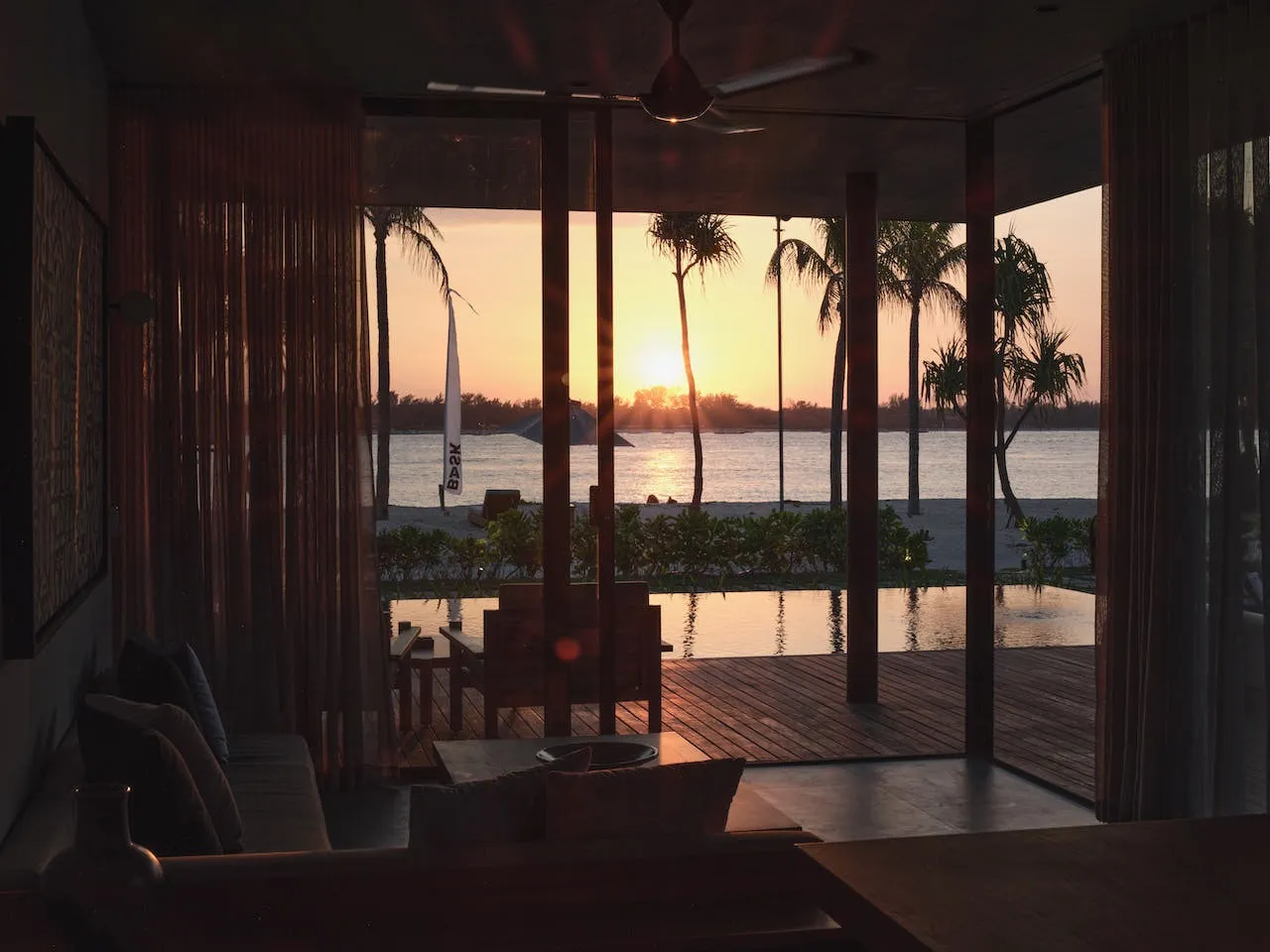
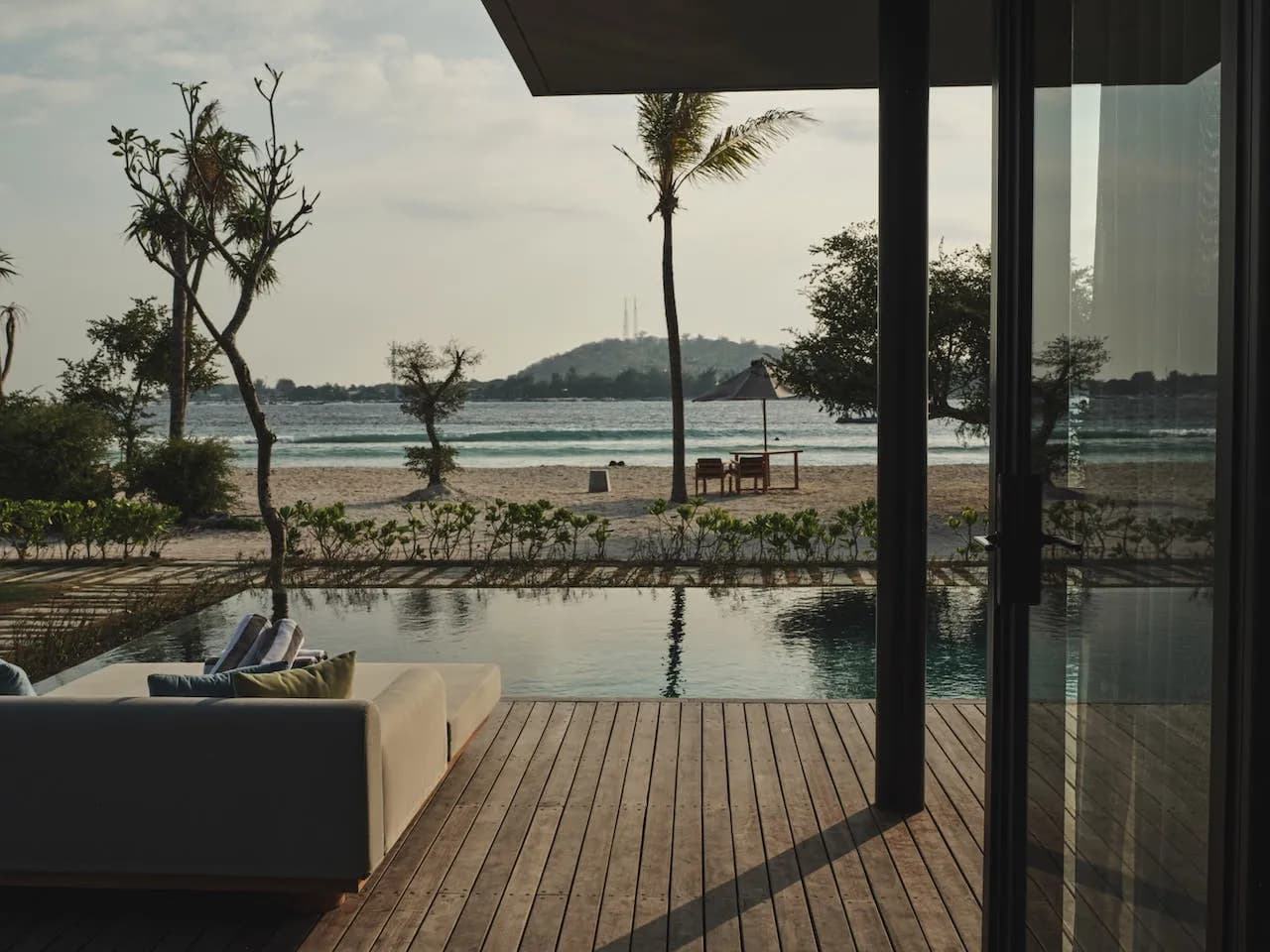
The villas spread across the site rather than clustering. Each has at least one open garden wall and a view that isn't another villa.
Materials
A short, considered palette:
Local stone. Lombok andesite for the floors and selected walls. Warm grey, cool to the touch, ages well in equatorial humidity.
Reclaimed teak. Doors, frames, decking. Sourced from old Javanese buildings where possible. The wood has stories before it has us.
Limewash and lime plaster. Walls in the public areas. Breathable, low-VOC, soft to the eye.
Rattan and bamboo. Furniture and screens. Made by local craftspeople. Replaceable when they wear.
Brass and bronze. Hardware. Develops a patina over the years that we don't mind at all.
No plastic anywhere visible. Internal pipes and fittings exist, of course, but the surfaces guests touch are natural materials.
Light
Probably the most considered single element. A few principles:
- Natural light first. Each villa has multiple light sources at multiple heights, sequenced so the room is usable from sunrise to sunset without a switch.
- Warm electric light second. 2700K throughout. Dimmable in most rooms.
- No overhead glare. Direct downlights are rare. Most light comes from wall sconces, table lamps, and ambient washes.
- Candles in the public spaces after sunset. Real wax. The single most quoted detail from returning guests.
Sound
Equally considered:
- Walls thick enough to keep neighbours' conversation contained. Standard concrete on the boundary walls, plus a dense layer.
- Floors in stone, not timber. Timber floors transmit footsteps. Stone absorbs them.
- No music in corridors. Music exists in the beach club at sunset and at Pomona during dinner. The rest of the site stays quiet.
- Air conditioning that doesn't hum. Specified for low operating noise. You don't notice it.
Water
The villa interaction with water is the design's quiet headline.
- Outdoor showers in every category. The right way to wash off sand.
- Plunge pools or shared pool. Each villa is either steps from the main pool or has its own water.
- Rain showers indoors and out. Generous flow, soft water.
- A view to the sea or a garden, never a wall, from every bedroom.
How the layout slows people down
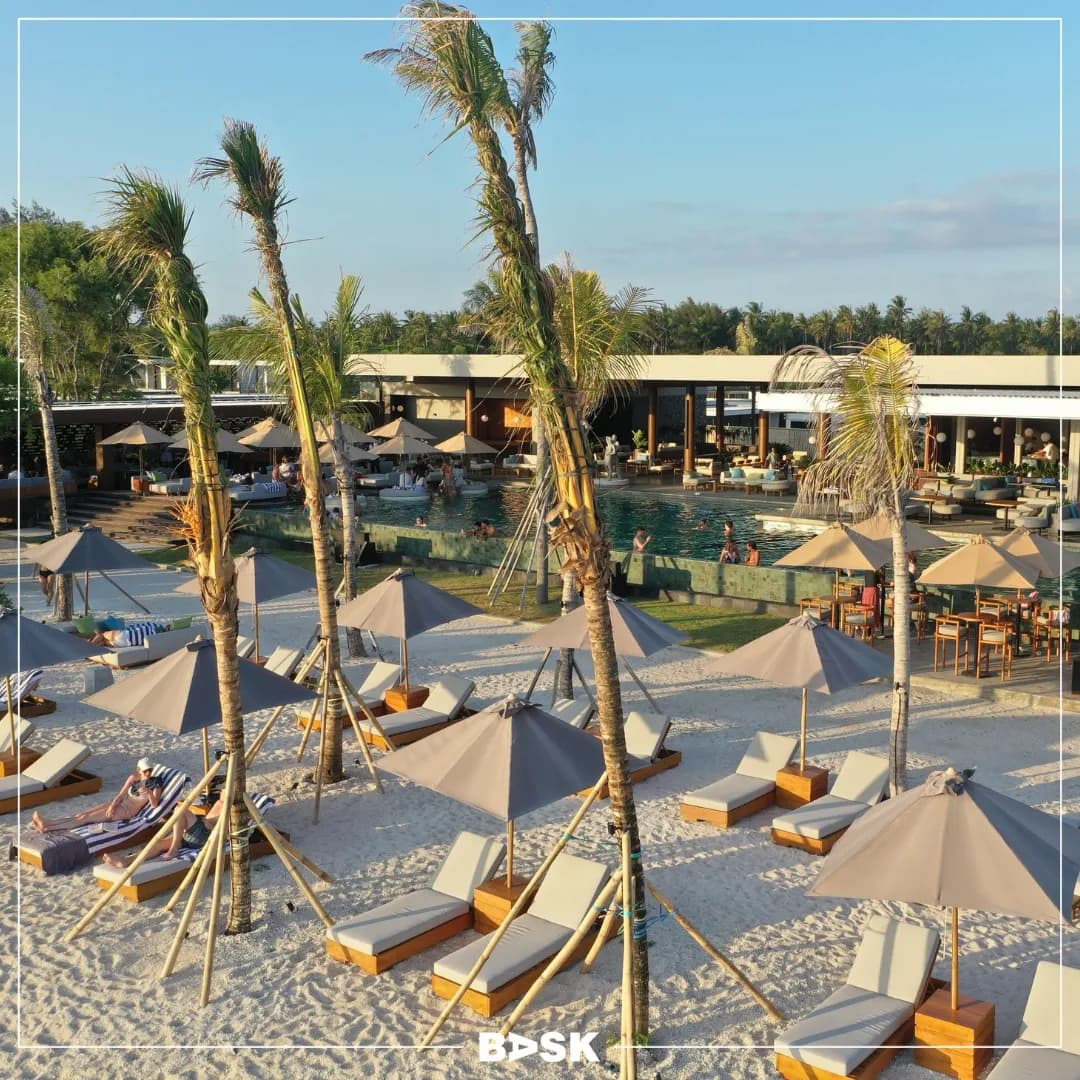
The site stretches longitudinally. The reception, restaurants, beach club, and spa are at different points along its length. To get from one to another, you walk five to seven minutes through palm-shaded paths.
This is deliberate. The walking is the time during which guests put down whatever screen they were holding, breathe a little deeper, notice the gecko on the wall. By the end of the first day, the pace of the site has begun to set the pace of your stay.
A common pattern: guests arrive sharply scheduled, plan tight afternoons, and by day three are looking at the map of the site for the first time, realising they haven't been to the spa yet, and walking there slowly.
What we built less of, on purpose
A few choices that other resorts at this price might have made differently:
- No casino or game room. Quiet evenings are the offer.
- No kids' club. Children are welcome and well-cared for, but the property isn't structured around a kids' programme. Families self-organise here.
- No conference space. This is not a business hotel.
- No nightclub. Music ends at the beach club. Quiet from there.
- No spa with twelve treatment rooms. A few spaces, mostly in-villa massage. Smaller scale, more attention.
- No mini-fridge full of branded snacks. A short list of curated choices. Restock by request, free for residents.
Each of these subtractions is part of why the resort feels different. The thing not there is usually doing as much work as the thing that is.
The team
The other side of "designed for stillness" is the people. The team is local where it can be, internationally experienced where the role requires it. Manuel runs the wine. Chef runs the kitchens. The front-of-house team is small and stays for years. Most guests recognise the same faces on a return visit. That's the design too.
Frequently Asked Questions
How many villas does BASK Gili Meno have?
31, across seven categories from Studio to Three-Bedroom Villa.
Are the villas standalone?
Some yes, some shared-wall. The Two-Bedroom and Three-Bedroom Villas are fully standalone with private gates. Studios and Suites are part of a longer building with thick boundary walls.
Do all villas have a private pool?
No. The Studio Plunge, the Studio Plus, the Suite (some), and the Two and Three-Bedroom Villas have private water. The Studios share access to the main pool.
Is there a kids' club?
No. Children are welcome at the resort and well-supported by the team but the property doesn't have a dedicated kids' programme.
What materials did you build with?
Local Lombok andesite stone, reclaimed teak, lime plaster, rattan, bamboo. Local where possible, durable for equatorial humidity, low-toxicity throughout.
How long has BASK been open?
The current iteration opened recently with the new design and operating team. We were operational under a different model before. The team is happy to talk about the history if you're interested.
Can I extend a villa stay?
Yes, subject to availability. The longer stays, especially in the Suite and the larger villas, are the rhythm the resort was built for.